

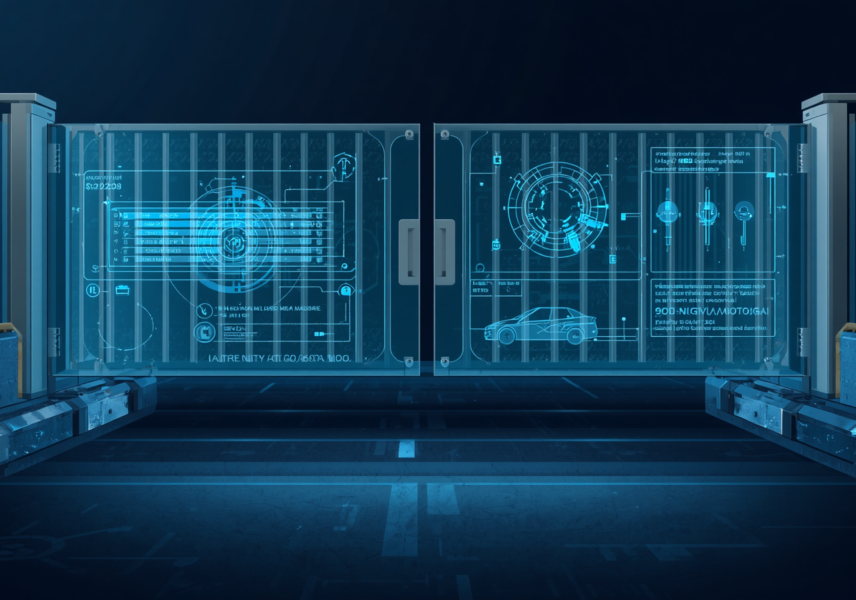
The Digital Twin: The New Frontier in Advanced Building and Plant Management
In recent years, the concept of the digital twin has emerged as one of the most promising innovations in the field of intelligent building and plant management. Originating in the industrial sector, this approach is rapidly spreading to the construction and facility management sectors, thanks to its ability to integrate data, models, and technologies to optimize a building’s entire life cycle.
What is a Digital Twin?
A digital twin is the virtual replica of a physical object, system, or process. In the construction context, it represents a dynamic digital copy of the real building, complete with all its structural, plant, and functional components. Through IoT sensors, monitoring systems, and management platforms, the digital twin receives real-time data from the physical building, enabling the analysis, simulation, and prediction of the behaviour of systems and structures.
From Design to Operations
The value of the digital twin is evident throughout the building’s entire life cycle. During the design phase, it allows for the integration of BIM (Building Information Modeling) models with energy and system simulation data, improving accuracy and collaboration between designers, engineers, and managers.
In the operational phase, the digital twin becomes a strategic tool for facility management: it allows for real-time monitoring of system performance, planning predictive maintenance interventions, and optimizing energy consumption.
Benefits for Building Management
The adoption of a digital twin offers numerous concrete benefits:
- Continuous monitoring: Data collected by sensors allows for constant monitoring of the status of systems and structures.
- Predictive maintenance: Analysis of historical and real-time data allows for anticipating failures and reducing downtime.
- Energy efficiency: Simulating energy behavior helps identify waste and optimize consumption.
- Integrated management: All building data—documentation, systems, maintenance—is centralized in a single digital platform.
- Sustainability and safety: The ability to simulate scenarios and interventions improves operational safety and reduces environmental impact.
Enabling Technologies
The operation of a digital twin is based on the integration of various technologies:
- Internet of Things (IoT) for real-time data collection.
- BIM and CAD for 3D modeling and accurate representation of the building.
- Artificial intelligence and machine learning for predictive analytics and process optimization.
- Cloud computing for large-scale data management and processing.
- Augmented and virtual reality for immersive visualization and interaction with the digital model.
The Future of Intelligent Management
The digital twin represents a decisive step towards the digital transformation of the construction industry. In a context where efficiency, sustainability, and safety are strategic priorities, this technology enables the shift from reactive to proactive and predictive management.
Companies that adopt digital twin-based solutions can benefit from more precise asset control, reduced operating costs, and greater long-term planning capabilities.
Conclusion
The digital twin is not just a virtual representation, but a true ecosystem of data and technologies that connects the physical and digital worlds. Its application in the management of buildings and plant systems paves the way for a new paradigm of efficiency, sustainability, and innovation.
From this perspective, the digital twin confirms itself as one of the key tools for building and managing the buildings of the future: intelligent, connected, and fully integrated with the needs of people and the environment.